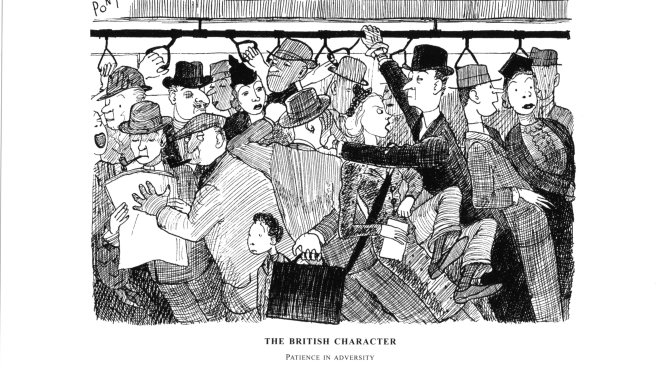
CRADLED IN CARICATURE : a multidisciplinary event
Friday 27 April 2012, COLT3, University of Kent, Canterbury
CALL FOR CONTRIBUTIONS
This one-day event will approach the notion of ‘caricature’ in its broadest sense, using it as a jumping-off point for discussions on exaggeration, stereotyping, representation, and characterisation. The multi-disciplinary event therefore intends to explore the following problems:
- Why are societies framed by traditions of exaggeration and stereotyping?
- How does fiction convey meaning through caricature and the categorisation of types?
- How does political economy, psychology, and perception appropriate these processes?
- How far and with what consequences does the web construct cultural bias?
- Are all societies and cultures (real, imagined; past, present) cradled in and constructed by caricature?
Cradled in Caricature welcomes contributions from scholars working in all disciplines. In order to encourage an open and fluid discussion, proposed contributions may take a variety of formats – from traditional papers, organised workshops and roundtable discussions, to readings, posters, films or short performance pieces.
Attendance at Cradled in Caricature is free of charge. Interested contributors and delegates should download an application form here, and contributors must return completed forms and abstracts (circa 300 words) to cradledincaricature@gmail.com by 3 March 2012. Queries or questions should be directed to James Baker at cradledincaricature@gmail.com or twitter.com/cincaricature.
Confirmed speakers:
- Robert L Patten, Lynette S. Autrey Professor in Humanities, Rice University.
- Dr Richard Taws, University College London.
- Dr Oliver Double, University of Kent.
- Dr Ernesto Priego, The Comics Grid/HASTAC.
We are delighted to announce that proposals will be considered for adaptation and publication in a special Autumn 2012 edition of Skepsi, the University of Kent’s Interdisciplinary Online Journal of European Thought and Theory in Humanities and Social Sciences. The deadline for submission of articles is 1 June 2012. Further information can be found on the event application form.
Cradled in Caricature is supported by the Faculty of Humanities, University of Kent, the Department of History of Art, University College London, The Paul Mellon Centre for Studies in British Art, and the Graduate School, University of Kent.




 cradledincaricature
You must be logged in to post a comment.