Old Bailey Online turns 10 years old on 15 April 2013. It is curious to consider that its lifetime echoes my own career as a historian. Old Bailey Online was the first digital research resource I used as an undergraduate historian, it was the resource which introduced me to the history of crime and punishment, it was the resource that sparked my interest in eighteenth-century British history. Had I not been introduced to the Old Bailey Online it is unlikely I would have become a historian. It was that significant (though clearly not quite significant enough for me to cite it properly in my undergraduate dissertation…) and even today the shorthand ‘OBO’ litters the incomplete references of my research notes and one-day-will-be published manuscripts.
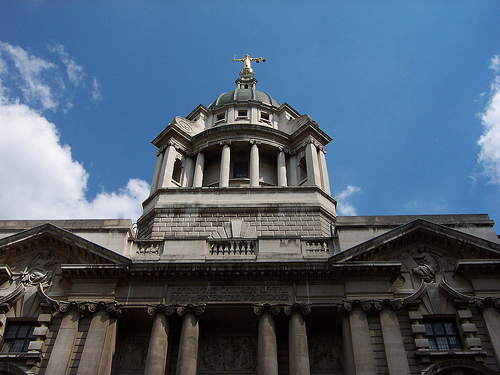
But what is it about OBO that was, and remains, so intoxicating? To name but a few reasons, it is simple to use and instant to access: so no login screens, no forgotten passwords, no paywalls, no institutional library routed access. It is vast in terms of chronology. It returns searches in which you can have confidence (I much later learnt that OBO used double-keying to generate the electronic texts, hence no wooly OCR). It has so many Londoners in it and say so much about them: for example the way in which Samuel Fores ran his printing business (OBO t17991204-39). The stories it tells are humbling, humourous and terrifying. And above all the people we encounter seem to speak to us – though far from complete transcriptions, as Magnus Huber has argued there is much to suggest that the proceedings represent the spoken word.
I emphasise ‘the people’ here as the place of the OBO within the digital resource landscape has changed enormously since its inception. I short since 2003 ‘Culturomics‘ not only happened but spread and spread and spread. What makes big data culturomics so troubling is that by revolving around the book and hence to an extent book-shaped thought (or at least book-shaped structures of knowledge presentation) the histories it produces are inevitably intellectual histories of a particular historical phenomenon or trend. By contrast the Old Bailey Proceedings may have been created by an institution of the state, but its contents – though dwarfed by Google’s dataset – tells about all of London society and are then today a valuable counter to the implicit elitism of culturomics, a reminder of how far we have to go to create a dataset of this sort which can truly represent the people who lived in the past.

OBO continues to be refined (version 7.0 launched in April 2012) and has produced spin-offs: the expanded dataset of London Lives, the federated search portal Connected Histories and the ambitious GIS driven Locating London’s Past. But it remains OBO to which I most often turn, whether it be to get a handle on the going price of colour (OBO t18010701-14) or conceptions of race (OBO t18100221-106) in the long-eighteenth century. Above all though it stands as a constant reminder of how disquieting the past can be, particularly when, as with the case of Robert Gerris from 1695, human life was treated by the authorities with such apparent disdain. As the case proceedings (OBO t16950220-20) eerily conclude:
Then being asked what Inn he Lodged at when came to London, he answered (with a kind of Laughter) that he was a stranger at this Town; and he had forgot the Sign, but it was like a Lyon, or some such Sign; then he being askt if he had any more to say, he answered, That he had no more to say, only that the Mare cost him 6 Guineas, which was a dear Bargain, and nothing vext him so, but that he had given the Mare so much Corn, which had cost him a great deal of money; so upon the whole he was found guilty of Felony, at which Verdict he Laught, but it was no Laughing matter, &c.
 cradledincaricature
You must be logged in to post a comment.