“Aren’t you writing a book or something?”
I keep getting asked this recently. Perhaps because my various non-book related activities – speaking at the Kent Open Access Forum, talking to distance learners about the joys of social media, opening an exhibition – make me seem like a writing averse procrastinator. Or, more likely, because not everyone has my movements at the forefront of their minds. Either way, I have been writing. If I hadn’t been the Paul Mellon Centre, to whom I owe my present release from teaching and part-time work, would have every right to get more than a little cross. Indeed the book is coming along very nicely: #AcWriMo being the impetus for a clean 40k words of progress since the start of November.
What, you might ask, have been the highlights? I was somewhat pleased to work in the phrase ‘it was all in the game‘ when describing why Samuel Fores would have kept the presses rolling rather than invoke the 1777 Print Copyright Act at the first sniff of plagiarism. Finding on the back of a letter from Hannah Humphrey to James Gillray dated 1798 the words ‘Don’t forget the Pigeon Pye’ also tickled me [see British Library Add Ms 27337, 29]. But the undoubted highlight was looking carefully at Isaac and Georg Cruikshank’s 1809 work The OP spectacles [BM Satires 11429] and discovering, to my delight, how much an idiot Isaac could be. For having spent so long making an exemplary copperplate etching, Isaac managed – and this is classic him – to etch the large ‘O’ and ‘P’ on the wrong lenses. Copperplate engravings and etchings had to be made as mirror images of the impression worked off by the roller press, and hence all lettering had to be written on the plate from right to left and in mirror image. But if you look closely at the big ‘O’ in the left hand glass you will see a faint mirror image of the letter ‘P’, and in the right hand glass a faint ‘O’. Tired, hurried, drunk, or plain forgetful, Isaac put the wrong letters in the wrong sides of the spectacles, and – one can imagine – had to carefully burnish them out so as not to delete too much of the work he and his teenage son had put into the plate. What an idiot.
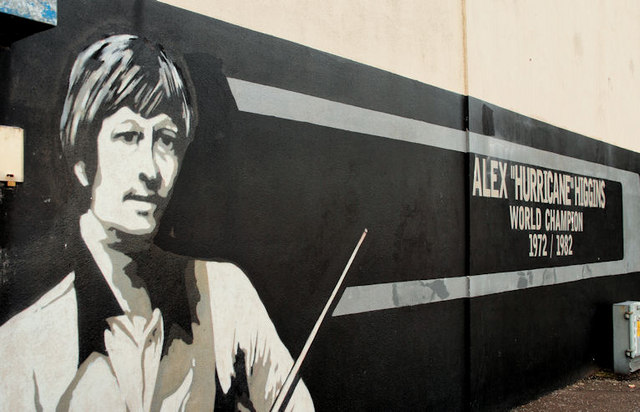
Writing is about rhythm (and the calm background chatter of snooker). Part of my rhythm involves having enough alternative activities – exhibitions, talks, forums – not to distract entirely from writing, but to give me a change from my desk and avoid the sense of grind often associated with writing. Variety really is the spice et cetera.
It also helps to have a little PRESSURE TO FINISH. I have none coming from a publisher (yet…), but I do have a welcome deadline and clear for the bulk of my writing activities. First, my fellowship ends as February ends. This doesn’t mean I have to down tools immediately, but I do have a moral responsibility to get the monograph to a decent draft stage by that point. I have also been invited to speak at the ‘Loyal Subversion – Caricatures from the Personal Union between England and Hanover 1714-1837‘ conference in Hanover which takes place February 21-23, the size of which (not to mention the excellent programme) demands I give my full attention to the paper I am planning. Finally, and most excitingly of all, I begin a new job in March as a Digital Curator at the British Library. I am thrilled to have been given this opportunity, and am thoroughly looking forward to getting stuck into some big digital projects, enabling digital research, and sharing my expertise with the curators at the BL. Working collaboratively in teams will be a big change from my current day-to-day, but although I’m far from done with Isaac and late-Georgian satire I am ready for a new challenge. Variety is the spice et cetera…
But, in the meantime, I have a book to finish. In just 6 weeks. Time for some more snooker I feel…
 cradledincaricature
You must be logged in to post a comment.